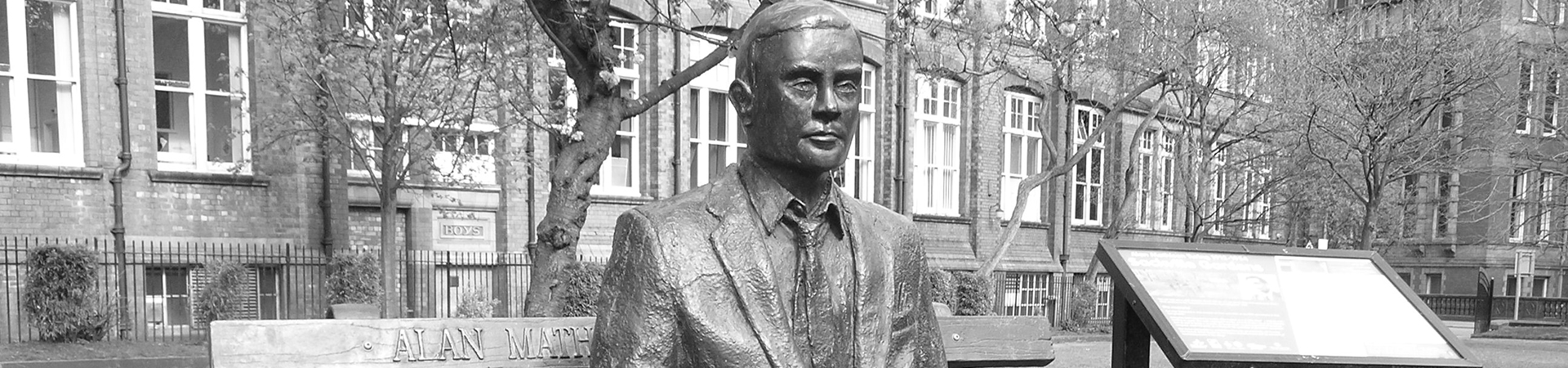
Alan Turing was an English computer scientist, mathematician, logician and cryptanalyst. Turing, born in London in 1912, was fascinated by science throughout childhood. While studying maths at Cambridge in the 1930s, he developed some of his most significant mathematical theories. After graduating, Turing went to Princeton in the US, where he began work on what was later to become the first digital computer program – the Turing Machine’. His revolutionary idea was for a machine that would read a series of 1s and 0s from a tape. These described the steps needed to solve a problem or task. But it was only years later that technology had advanced sufficiently to transfer these ideas into real machines. Despite his brilliance, he suffered from a feeling of isolation, and found it difficult to make friends. He died suicide at the age of 42, following the persecution suffered by the British authorities because of his homosexuality.
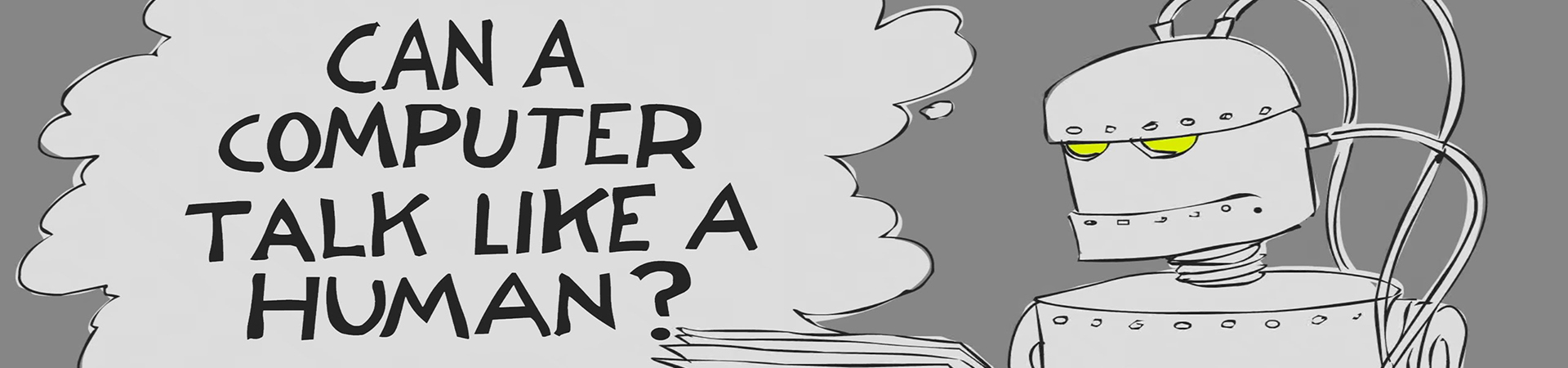
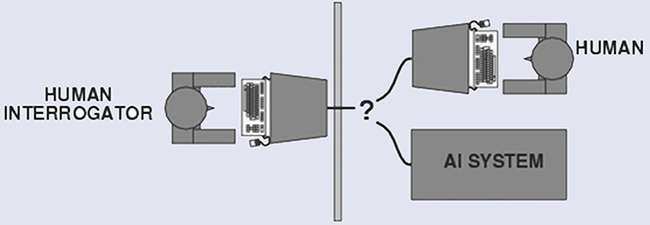
The Turing test, developed by Alan Turing in 1950, is a test of a machine's ability to exhibit intelligent behaviour equivalent to, or indistinguishable from, that of a human. Turing proposed that a human evaluator would judge natural language conversations between a human and a machine designed to generate human-like responses. The evaluator would be aware that one of the two partners in conversation is a machine, and all participants would be separated from one another. The conversation would be limited to a text-only channel such as a computer keyboard and screen so the result would not depend on the machine's ability to render words as speech. If the evaluator cannot reliably tell the machine from the human, the machine is said to have passed the test.
Colossus was the first programmable electronic computer in the history of computer science. Built and put into operation in the United Kingdom during World War II, it was able to force codes used by Enigma by the Nazis to protect the correspondence between Adolf Hitler and his chief of staff. Unknowingly the Germans themselves helped decipher Enigma thanks to the repetitions that were present in every message sent as "Heil Hitler!"